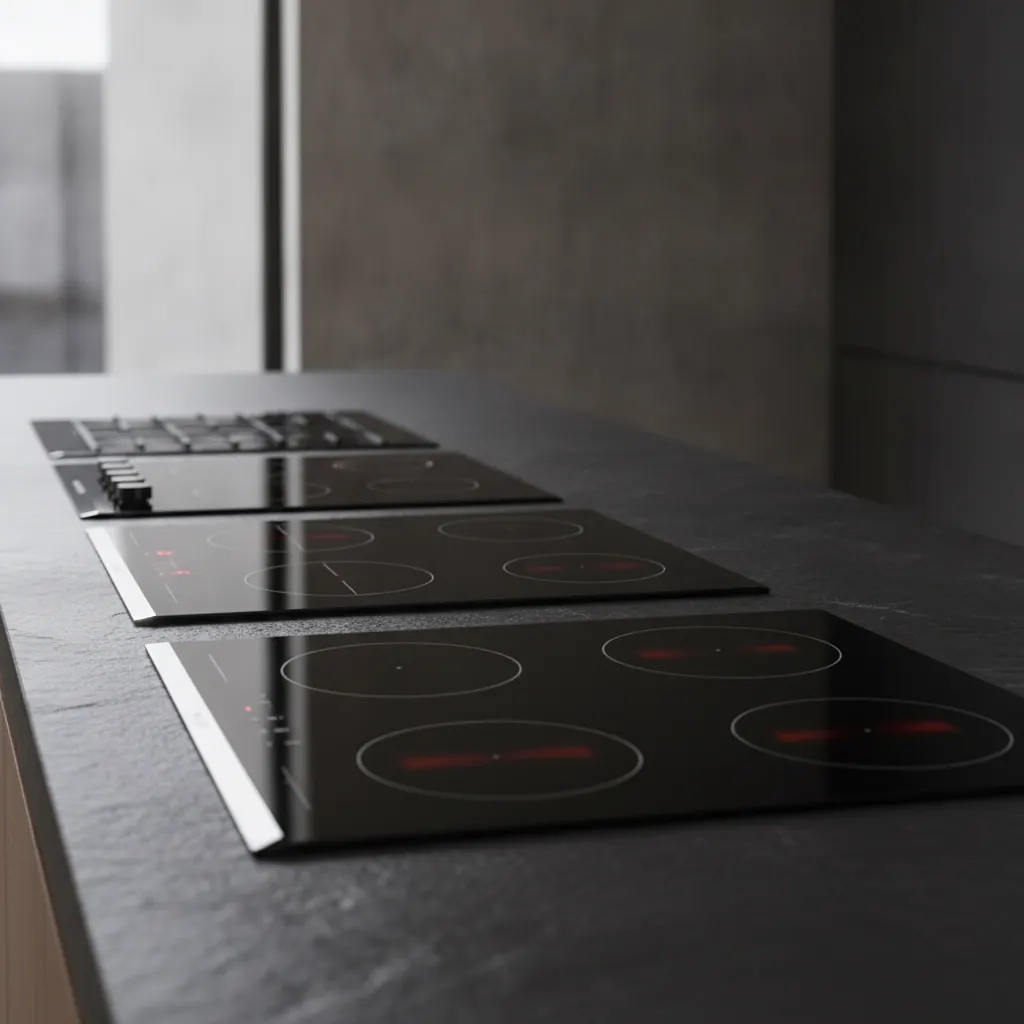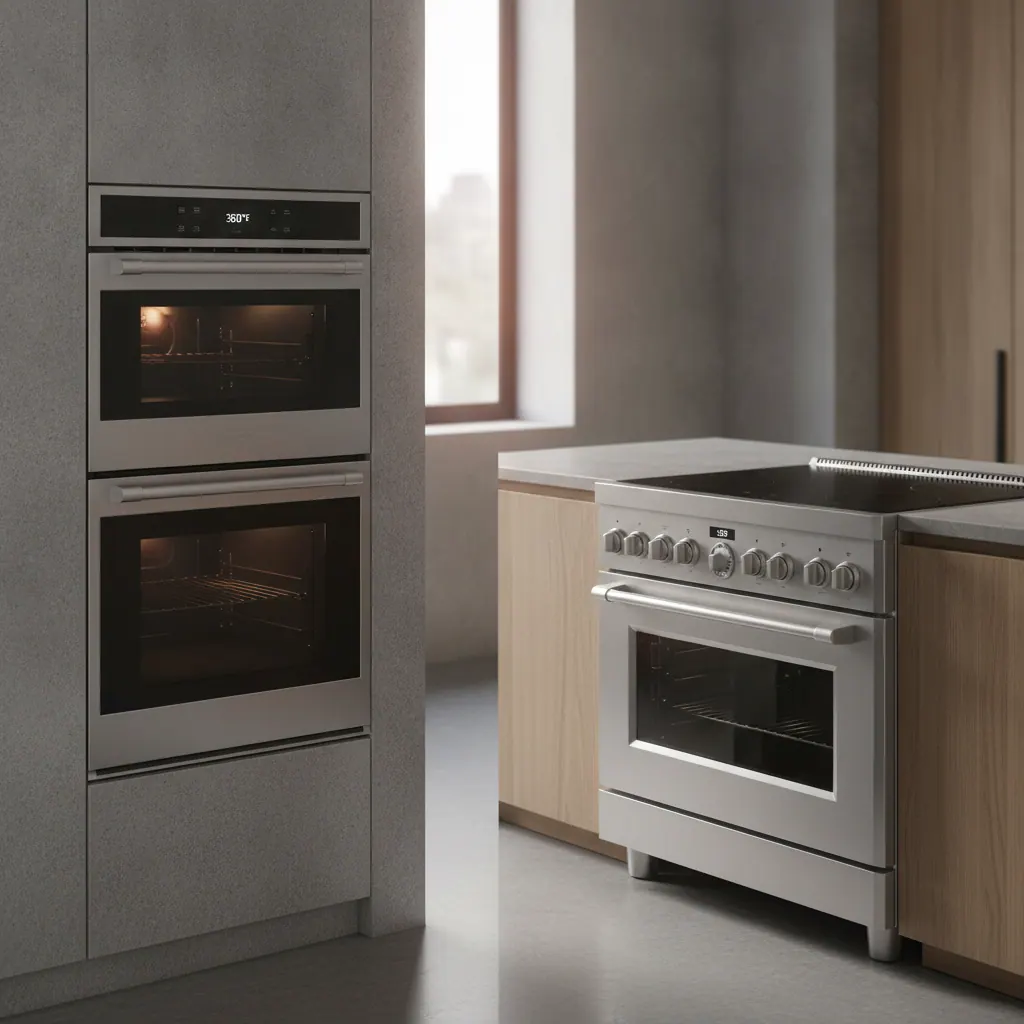
The cooktop vs rangetop debate trips up almost every kitchen renovator at some point. Both drop into a countertop cutout, both deliver burner-only cooking with no oven attached, and both look similar at a glance. But the differences in installation depth, ventilation power, BTU output, and price are significant enough to shape your entire kitchen layout. If you are deciding between a cooktop vs rangetop for a new build or remodel, this guide breaks down exactly what separates them and which one fits your cooking style and budget.
Here is the short answer: a cooktop is a slim, drop-in surface that sits flush in your counter and works with any wall oven or no oven at all. A rangetop is a deeper, more powerful pro-style unit that requires a base cabinet and pairs with high-CFM ventilation. Read on for the full comparison. (Note: this is not the same as cooktop vs range — a range is an all-in-one unit with an oven built in. If that’s your question, see our cooktop vs range guide instead.)
What Is a Cooktop?
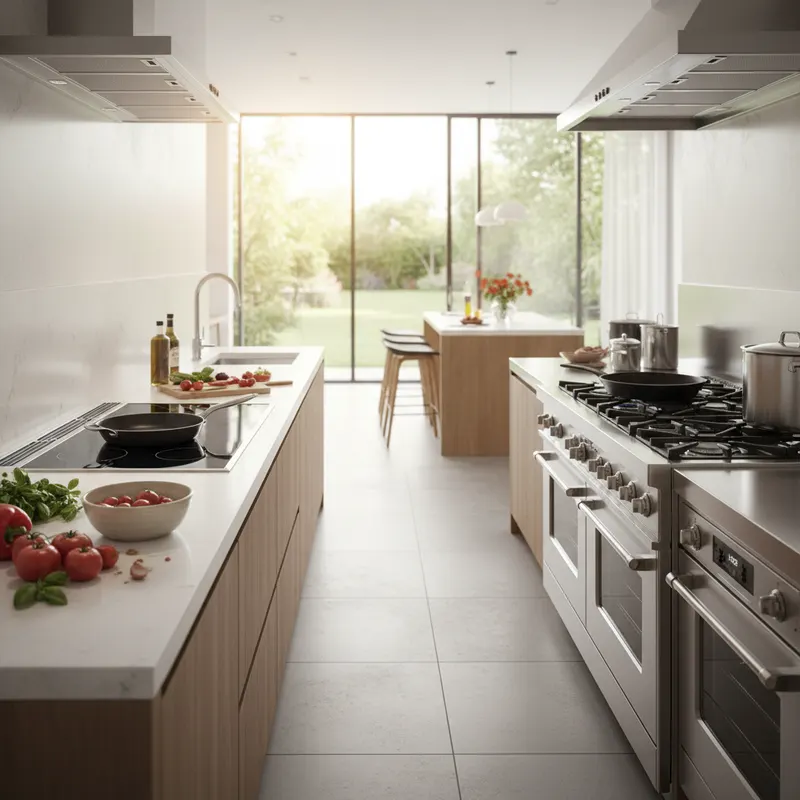
A cooktop is a self-contained cooking surface that drops into a hole cut in your countertop. It has no oven below it, freeing up the cabinet space underneath for drawers, a wall oven, or storage. Cooktops come in gas, electric, and induction versions, and they are prized for their flush, low-profile installation.
Because they sit shallow in the counter, cooktops are the more flexible choice for compact kitchens and island installations. Most gas cooktops top out around 18,000-20,000 BTU on the most powerful burner. Standard widths run 30, 36, and 48 inches. If you want help narrowing your options, our guide on how to choose a cooktop walks through fuel type, burner layout, and sizing.
The biggest advantage of a cooktop is ventilation freedom. Because output is moderate, you can usually pair a cooktop with an over-the-counter hood in the 400-600 CFM range, or even a downdraft system on an island. This opens up design possibilities that a rangetop simply cannot match, especially in open-concept homes where a bulky hood would dominate the sightline.
Cooktops also shine in resale-friendly, family-oriented kitchens. The shallow profile means you can install full-depth drawers directly beneath the surface, a layout that storage-starved kitchens love. And because cooktops are available in electric and induction formats in addition to gas, you are not locked into running a gas line at all. For renters-turned-owners and first-time renovators, that electrical flexibility removes a major plumbing and permitting headache from the project.
One more practical point: cooktops are widely available, easy to find in stock, and supported by nearly every major appliance brand from GE and Bosch to Frigidaire and KitchenAid. That broad availability keeps prices competitive and makes warranty service straightforward across the United States.
What Is a Rangetop?
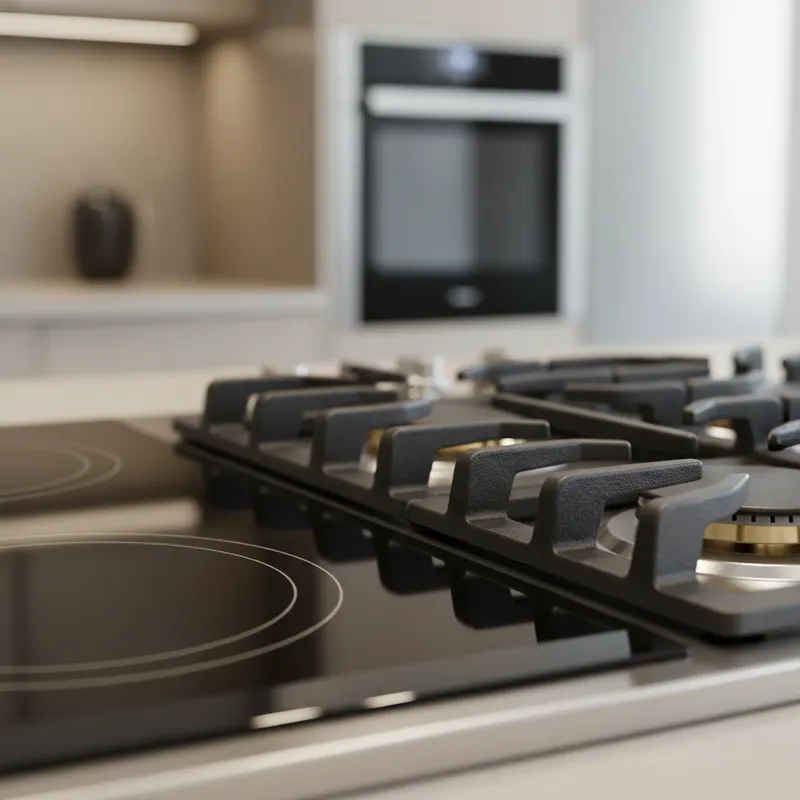
A rangetop is a professional-grade burner unit that sits on top of a base cabinet rather than dropping into a thin counter. It is essentially the cooking deck of a pro range without the oven. Rangetops are taller, deeper, and far more powerful than cooktops, and they almost always use front-mounted knobs instead of touch controls.
Rangetops are built for serious heat. Wolf’s gas rangetops, for example, offer dual-stacked sealed burners delivering up to 20,000 BTU, while BlueStar’s open-burner rangetops push individual burners to 25,000 BTU, comparable to commercial restaurant equipment. Thermador’s Pro Grand rangetops feature the Star burner design rated for high output with their ExtraLow simmer setting dropping as low as 100 BTU for delicate sauces.
The trade-off is ventilation. A high-BTU rangetop demands a powerful hood, often 900-1,200 CFM or more, plus adequate make-up air. This is a non-negotiable code and safety requirement in many jurisdictions. If raw power and a commercial look are your priorities, a rangetop delivers, but plan your hood budget accordingly.
Rangetops also win on burner versatility for serious cooks. Many pro models include specialty burners such as integrated griddles, French tops, or grill modules that drop into the cooking deck. BlueStar offers an interchangeable cooking surface system, letting you swap in a charbroiler or griddle on the same unit. Wolf’s dual-stacked burner design layers two tiers of flame so a single burner can both sear at full output and hold a true low simmer without flickering out. Thermador’s Pro Grand line pairs its Star burners with the patented ExtraLow setting that cycles the flame for gentle, even heat under chocolate or hollandaise.
That mechanical sophistication is the real reason rangetops command premium prices. You are paying for heavier brass and stainless components, continuous cast-iron grates that let you slide heavy pots between burners, and burner engineering tuned for both extremes of the heat range. For a household that genuinely cooks at a high level every day, those features translate into better results, not just better looks.
Cooktop vs Rangetop: Head-to-Head Comparison
The table below summarizes the core differences buyers care about most.
| Feature | Cooktop | Rangetop |
|---|---|---|
| Installation | Drops flush into countertop | Sits on a base cabinet, deeper cutout |
| Typical depth | 20-22 in | 24-27 in |
| Max BTU (gas) | 18,000-20,000 | 20,000-25,000+ |
| Ventilation needs | 400-600 CFM hood | 900-1,200+ CFM hood + make-up air |
| Controls | Touch or front knobs | Front-mounted pro knobs |
| Fuel options | Gas, electric, induction | Mostly gas, some dual-fuel |
| Price range (USD) | $700-$3,000 | $2,500-$8,000+ |
| Look | Sleek, minimalist, flush | Commercial, pro-style |
As the comparison shows, the choice often comes down to how much you cook, how powerful you need your burners, and whether your ventilation setup can support a pro-style unit. For high-output gas options in particular, see our roundup of the best 36-inch gas cooktops.

Installation and Ventilation Differences
Installation is the most practical dividing line in the cooktop vs rangetop decision. A cooktop requires only a shallow countertop cutout, typically around 20-22 inches deep, and leaves the cabinet below open. A rangetop demands a deeper cutout, usually 24-27 inches, and must rest on a properly sized base cabinet. Wolf, for instance, specifies precise cabinet heights and cutout dimensions for each rangetop model that installers must follow exactly.
Ventilation is equally critical. Because rangetops generate far more heat and combustion byproducts, building codes in many areas require a high-CFM hood and a make-up air system to replace the air the hood exhausts. Skipping this step is both unsafe and a code violation. For step-by-step requirements, read our cooktop installation guide before committing to either appliance.
If you are torn between fuel types as well as form factors, our breakdown of induction vs gas cooktops explains how each performs on speed, efficiency, and cleanup.
Make-up air deserves special attention because it surprises many homeowners. When a 1,200 CFM hood pulls air out of a tightly sealed modern home, that air has to be replaced from somewhere, or the hood will struggle, doors will be hard to open, and combustion appliances can backdraft dangerously. Codes such as those based on the International Residential Code commonly require an automatic make-up air system once exhaust capacity crosses 400 CFM. A rangetop almost always pushes you past that threshold, adding ductwork, a damper, and sometimes a tempered-air heater to the project. A cooktop, by contrast, frequently stays under the threshold, sidestepping the entire requirement and its associated cost.
Clearance to combustibles is another installation detail that differs. Rangetops typically demand more generous side and rear clearances to walls and upper cabinets because of their heat output, and the hood must be mounted at a manufacturer-specified height above the burners. Cooktops are more forgiving, which is why they slot so easily into islands and peninsulas where a rangetop and its towering hood would feel oversized.
Price and Value: Which Is Worth It?
Budget often settles the debate. A quality gas or induction cooktop runs $700 to $3,000 depending on width and brand. A pro-style rangetop starts around $2,500 and can exceed $8,000 for a 48-inch BlueStar or Thermador model. Then add the higher cost of a commercial-grade hood and make-up air for a rangetop, and the total project gap widens further.
For most home cooks, a high-quality cooktop delivers everything they need at a fraction of the cost. A rangetop earns its premium only if you regularly cook at high heat, use heavy stockpots and woks, or simply want the unmistakable pro-kitchen aesthetic. If induction speed appeals to you instead, our list of the best induction cooktops 2026 highlights models that boil water faster than most gas burners.
A rangetop is worth the extra money only if your cooking habits and ventilation budget can justify commercial-level BTU output. For everyone else, a cooktop offers better value and far easier installation.

Which Should You Buy?
Choose a cooktop if you want flexible installation, a clean flush look, induction or electric options, lower ventilation demands, and a friendlier price. Choose a rangetop if you cook at high heat constantly, want commercial-grade BTU output of 20,000 to 25,000, and have the cabinet space and ventilation budget to support it.
For the majority of US kitchens, a cooktop is the smarter, more cost-effective buy. Rangetops are a fantastic upgrade for dedicated home chefs and luxury kitchens, but they ask more of your space, your wallet, and your contractor.
Conclusion
The cooktop vs rangetop decision really comes down to power, installation, and budget. A cooktop wins on flexibility, price, and ease of installation, making it the right call for most homeowners. A rangetop wins on raw BTU output and pro-kitchen presence, rewarding serious cooks who can support its ventilation and cabinet requirements. Match the appliance to how you actually cook, and you will be happy for years.
Ready to find your perfect match? Explore our in-depth reviews and buying guides at Cooktop Hunter to compare top models, BTU ratings, and prices before you buy.
Frequently asked questions
What is the difference between a cooktop and a rangetop?
A cooktop drops into a countertop cutout and is finished on all four sides, with controls usually on the surface itself. A rangetop is a pro-style unit that slides into a cabinet gap like a range but without an oven, with front-mounted knobs and a raised back. Rangetops are almost always gas, larger, heavier and considerably more expensive, and they need a deeper cabinet run.
Is a rangetop worth it over a cooktop?
Only if you want the pro-style format and the burner output that comes with it. Rangetops offer higher BTU burners, continuous heavy grates and front knobs that many cooks prefer, but they cost substantially more, demand more ventilation, and give up the counter space a cooktop preserves. For induction or electric, the question rarely arises — the rangetop format is overwhelmingly gas.
Can you install a rangetop in a standard cooktop cutout?
Generally not. A rangetop needs a cabinet opening rather than a countertop cutout, since it sits down into the cabinetry and its front face is exposed. Converting a cooktop installation to a rangetop usually means modifying cabinets and countertop together, and often upgrading ventilation to match the higher burner output. Treat it as a remodel rather than an appliance swap.
Do rangetops need more ventilation than cooktops?
Usually yes, because they carry higher total BTU output. Sizing gas ventilation at roughly 1 CFM per 100 BTU means a pro-style rangetop commonly lands at 900 CFM or more, well past the 400 CFM threshold that triggers a makeup air requirement in IRC jurisdictions. The ventilation system is often the larger part of the budget.