Samsung cooktops have become one of the most talked-about choices for kitchens that want strong performance, smart-home connectivity, and a price that undercuts the premium European brands. Whether you are weighing a smart induction model with Virtual Flame Technology, a powerful gas burner setup, or a budget-friendly electric radiant unit, Samsung cooktops cover the full range of cooking styles. This guide breaks down the real 2026 lineup, the standout tech, honest pros and cons, and exactly who each model suits.
Quick answer: Samsung cooktops are a strong value pick, offering induction models with Virtual Flame LEDs, Flex Zone bridging, and SmartThings Wi-Fi (around $2,299–$2,599), gas cooktops with a 22K BTU dual power burner (roughly $900–$1,500), and electric radiant units from about $700. They trade some premium refinement for connectivity and price.
The Samsung cooktop lineup at a glance
Samsung splits its built-in cooktops into three families: induction, gas, and electric radiant. Each targets a different buyer, but they share Samsung’s design language, smooth ceramic-glass surfaces, and a focus on usability. Below is a snapshot of the most relevant current models, drawn from Samsung’s official product listings and major retailers.
| Samsung line | Type | Size | Key feature | Approx. price |
|---|---|---|---|---|
| NZ30K7880US | Smart induction | 30” | Virtual Flame, Flex Zone, Wi-Fi, 8.6 kW | ~$2,299 |
| NZ36K7880US | Smart induction | 36” | Virtual Flame, Flex Zone, Wi-Fi | ~$2,599 |
| NA36N7755TS | Smart gas | 36” | 22K BTU dual power brass burner, Wi-Fi | ~$1,500 |
| NA36R5310FS | Gas | 36” | 5 sealed burners, cast-iron grates | ~$1,000 |
| NA30R5310FS | Gas | 30” | 4 sealed burners, 45K BTU total | ~$900 |
| NZ30R5330RK | Electric radiant | 30” | 4 elements, 7.5 kW, ENERGY STAR | ~$700 |
Prices are typical retail listings as of mid-2026 and shift with promotions. Always confirm at checkout.
Samsung induction cooktops: Virtual Flame and Flex Zone
Samsung’s induction range is where the brand’s engineering shows best. The 30-inch NZ30K7880US delivers 8.6 kW of total power across five elements, including a powerful center dual burner rated at 3,600W (boosting to 4,800W), according to Samsung’s published specifications. The 36-inch NZ36K7880US scales that up with more width for big-batch cooking.
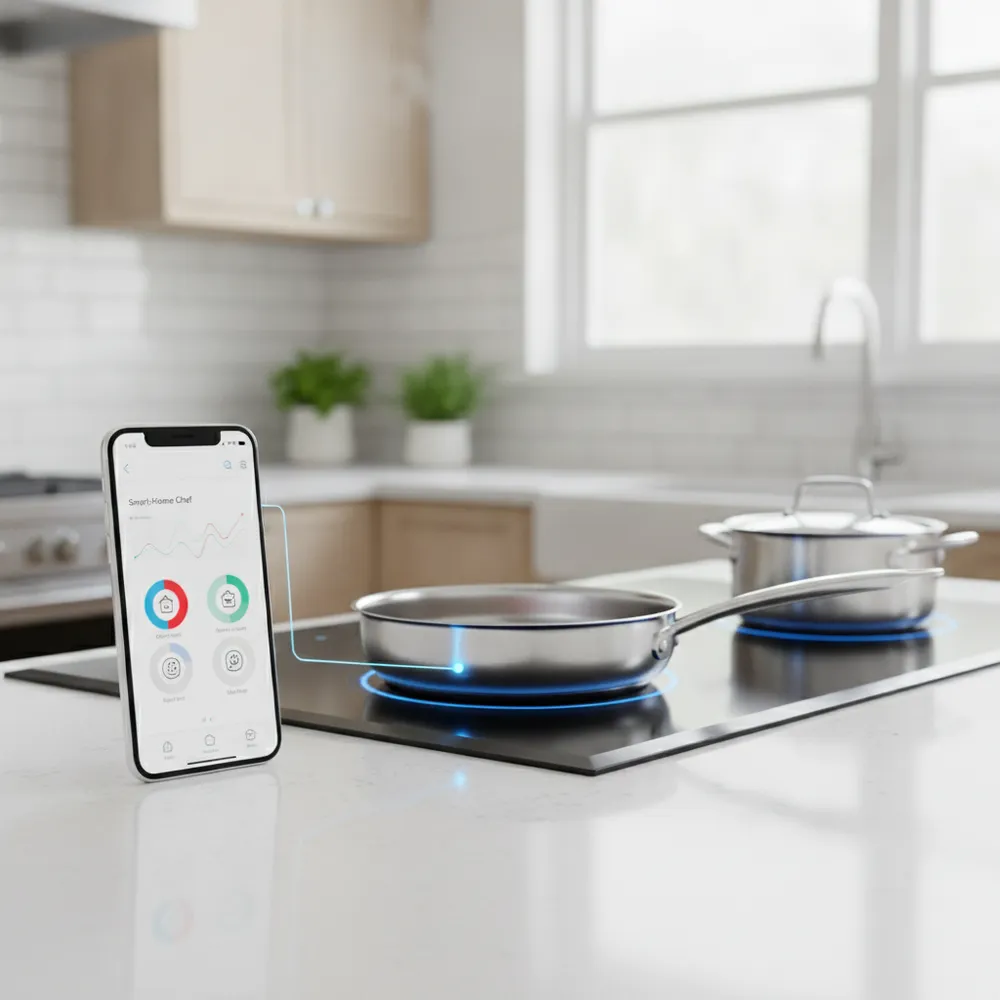
Virtual Flame Technology
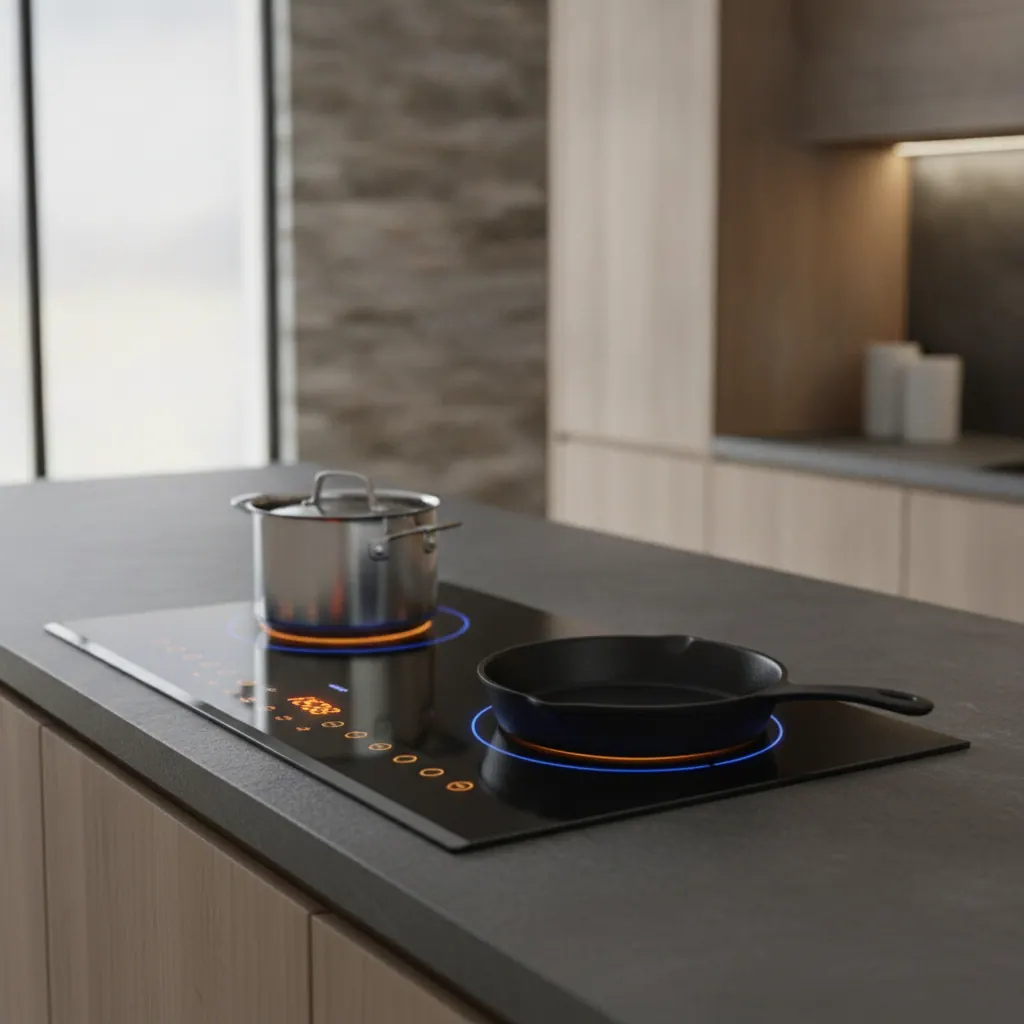
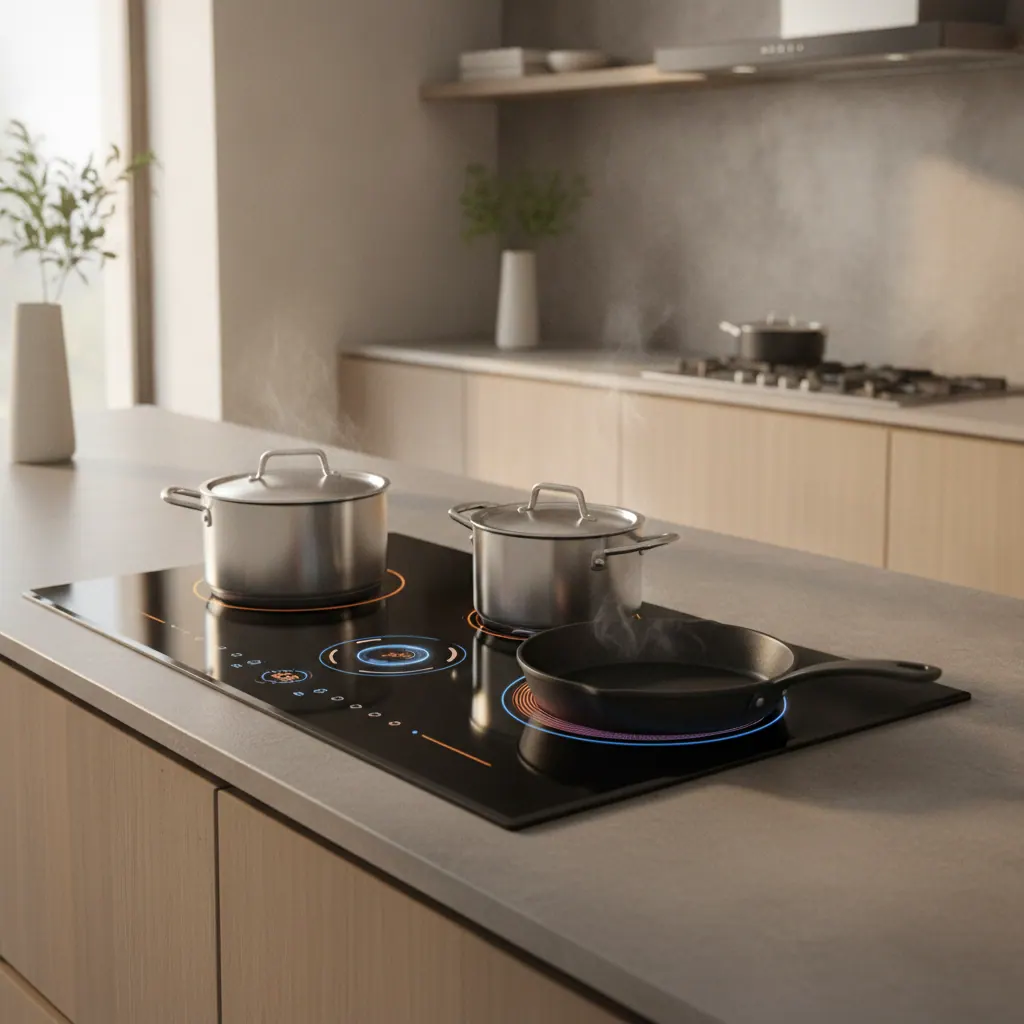
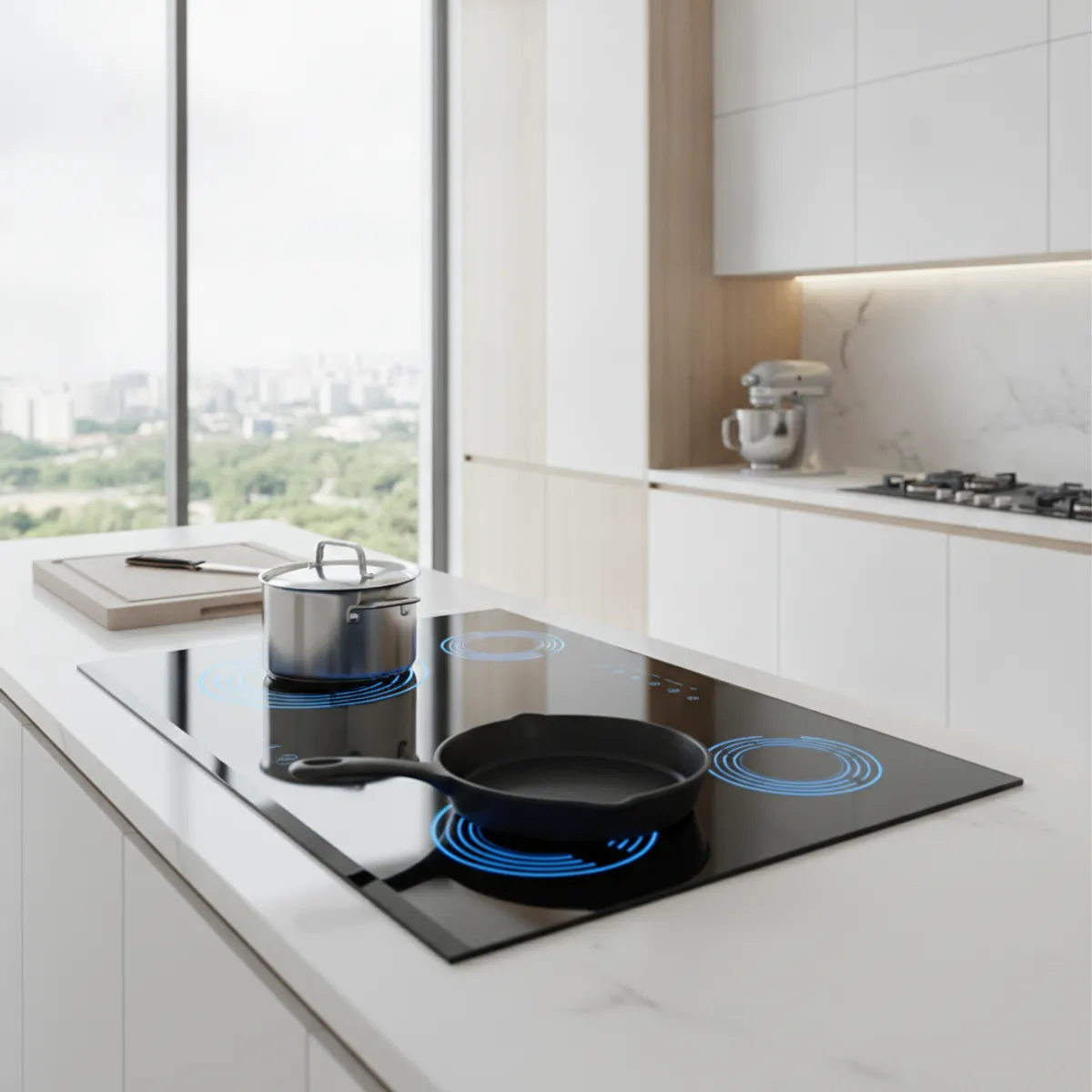
The signature feature on Samsung induction cooktops is Virtual Flame Technology. Because induction surfaces stay cool and produce no visible flame, it can be hard to tell at a glance whether a burner is on. Samsung solves this with LED lights projected in front of each element that glow like a real gas flame, brightening as you raise the heat. It is a genuinely useful safety and usability touch, especially for cooks transitioning from gas.
Flex Zone bridging
Samsung’s Flex Zone (sometimes called FlexCook) lets you bridge two adjacent elements into one large cooking zone. That eliminates “dead spots” when using a griddle, fish poacher, or oversized stockpot. It is a feature you will also find on premium brands, so seeing it at Samsung’s price point is a meaningful win. If induction is your priority, compare these against our roundup of the best induction cooktops of 2026.
SmartThings and Wi-Fi
Every modern Samsung induction cooktop ships with built-in Wi-Fi and full SmartThings app integration. You can monitor element status, set timers, receive notifications, and tie the cooktop into a broader Samsung smart-home ecosystem. For households already running SmartThings, this is one of Samsung’s strongest differentiators over the competition.
Samsung gas cooktops: power for traditional cooks
If you prefer an open flame, Samsung’s gas cooktops are competitive on both power and price. The flagship 36-inch NA36N7755TS centers on a 22,000 BTU dual-ring brass power burner that delivers serious high-heat searing yet drops to a true low simmer, per Samsung’s specs. It also includes Wi-Fi connectivity, making it one of the few smart gas cooktops on the market.
For buyers who want straightforward performance without the smart features, the NA36R5310FS (36-inch, five sealed burners) and the 30-inch NA30R5310FS (four burners, 45,000 BTU total output) offer continuous cast-iron grates and LP conversion kits at lower price points. If you are torn between fuel types, our deep dive on induction vs gas cooktops lays out the trade-offs in cost, speed, and cleanup.
Samsung electric radiant cooktops: the value entry point
The NZ30R5330RK is Samsung’s accessible 30-inch electric radiant cooktop. It packs four heating elements totaling 7.5 kW, including a 2.5 kW center burner and a dual 5”/8” element for flexible pot sizing, and it carries ENERGY STAR certification. At a typical $699 list price, it is the most affordable way into the Samsung cooktop ecosystem. It lacks the speed and efficiency of induction, but for renters, secondary kitchens, or budget remodels it is a sensible pick. Compare it against rivals in our guide to the best electric cooktops of 2026.
Sizes and control types
Samsung cooktops are built primarily in 30-inch and 36-inch widths, matching standard North American cabinet cutouts. The 36-inch models add a fifth burner and more usable surface, which matters if you regularly cook multiple dishes or use wide cookware. For dedicated large-format shoppers, see our best 36-inch induction cooktops comparison where Samsung’s NZ36K7880US appears.
On controls, Samsung offers two approaches:
- Digital touch controls integrated into the glass for a clean, minimalist look.
- Removable magnetic analog knobs on select induction models, giving the tactile precision of a dial that lifts off for easy cleaning.
That magnetic-knob option is a thoughtful detail that bridges the gap between touch-screen modernity and old-school knob feel.
Pros and cons of Samsung cooktops
No brand is perfect. Here is an honest assessment based on manufacturer specs and credible reviews.
Pros
- Strong burner power: 8.6 kW induction and a 22K BTU gas power burner rival pricier brands.
- Virtual Flame LEDs add real safety and usability on induction.
- Flex Zone bridging and SmartThings Wi-Fi at a competitive price.
- Wide model range covering induction, gas, and budget electric.
- Magnetic analog knob option on premium induction units.
Cons
- Fewer premium-tier finish and trim options than European rivals.
- Smart features depend on the SmartThings app, which can be overkill for simple cooks.
- Some retailers report variable service experiences; check warranty terms locally.
- Induction pricing, while competitive, still sits at a premium versus radiant electric.
Samsung vs GE Profile and Bosch
Positioning matters when you are spending four figures. Here is how Samsung stacks up against its two closest competitors.
Samsung vs GE Profile. GE Profile is widely regarded as the polish leader, with SmartHQ integration, tri-ring edge-to-edge burners, and refined precision. Samsung counters with Virtual Flame LEDs, Flex Zone, SmartThings, and frequently lower prices. If you want the most premium feel, GE Profile edges ahead; if you want connected features and value, Samsung wins. We put them head to head in our GE Profile vs Samsung induction cooktop comparison.
Samsung vs Bosch. Bosch leans into understated German design, quiet precision, and a reputation for reliability, but it generally costs more and is lighter on flashy smart features. Samsung offers more connectivity and aggressive pricing. Shoppers cross-shopping the European route should read our Bosch cooktops guide, and those eyeing the absolute premium tier can compare with Miele cooktops. Samsung’s closest fellow-Korean rival is LG — see our LG cooktops review for that very similar tech-forward, value-led alternative.
Price tiers and warranty
Samsung cooktops span a wide range:
- Entry (electric radiant): around $700 for the NZ30R5330RK.
- Mid (gas): roughly $900–$1,500 depending on size and the smart 22K BTU burner.
- Premium (smart induction): about $2,299 for 30-inch and $2,599 for 36-inch.
On warranty, Samsung’s electric cooktop coverage typically includes 1 year parts and labor, plus 5 years on the ceramic glass and radiant heating elements, per Samsung’s published terms. Coverage varies by model and region, so verify the specific warranty document before purchase.
Who should buy a Samsung cooktop?
- Smart-home households already invested in SmartThings get the most from Samsung’s Wi-Fi integration.
- Value-focused remodelers who want induction performance without paying European premiums.
- Gas loyalists who still want a high-output 22K BTU burner with optional connectivity.
- Budget kitchens that need a reliable radiant electric unit under $750.
If you are still mapping out your decision, start with our framework on how to choose a cooktop, which walks through fuel type, size, controls, and budget in order.
The bottom line
Samsung cooktops deliver a compelling mix of power, smart features, and value that few brands match at the same price. The induction lineup, with Virtual Flame Technology and Flex Zone, is the standout, while the gas and electric models round out a complete range. They are not the most luxurious option on the market, but for connected kitchens and value-minded buyers, Samsung cooktops earn a firm spot on the shortlist.
Frequently Asked Questions
Are Samsung cooktops any good?
Yes. Samsung cooktops are well-regarded for strong burner power, useful smart features like SmartThings Wi-Fi, and competitive pricing. Induction models offer Virtual Flame LEDs and Flex Zone bridging, while gas models include a 22K BTU dual power burner. They trade some premium polish for clear value.
What is Samsung Virtual Flame induction?
Virtual Flame Technology uses LED lights projected in front of each induction element that glow like a real gas flame. Because induction surfaces stay cool and show no visible heat, the LEDs give you an at-a-glance cue showing which burners are on and roughly how high they are set.
Does Samsung make 36-inch cooktops?
Yes. Samsung offers 36-inch cooktops in induction (NZ36K7880US), gas (such as the NA36N7755TS with a 22K BTU dual burner), and other configurations. The 36-inch induction model lists around $2,599 and adds extra cooking width and Flex Zone capacity over the 30-inch version.
Samsung vs GE Profile induction — which is better?
GE Profile generally leads on premium polish, SmartHQ integration, and tri-ring edge-to-edge burners. Samsung counters with Virtual Flame LEDs, Flex Zone bridging, SmartThings, and often lower pricing. Choose GE Profile for top-tier refinement; choose Samsung for value and a connected smart-home ecosystem.
How much do Samsung cooktops cost?
Samsung cooktops span roughly $700 to $2,600. Electric radiant 30-inch models start near $700, gas cooktops typically run $900 to $1,500, and smart induction models list around $2,299 (30-inch) to $2,599 (36-inch) before retailer discounts and promotions.