If you have searched for wolf cooktops while planning a high-end kitchen, you have probably noticed two things: the prices are steep, and the information is scattered across dealer pages. This guide pulls it together. Wolf cooktops are among the most recognizable professional-style cooking surfaces on the market, defined by powerful dual-stacked gas burners, precise induction technology and those unmistakable red knobs. Below we break down every fuel type, size, standout feature and price tier so you can decide whether wolf cooktops belong in your kitchen.
Quick answer
Wolf cooktops are premium American-made cooking surfaces sold in gas, induction and electric versions across 15-, 30- and 36-inch widths. Gas models use patented dual-stacked sealed burners (up to 20,000 BTU); induction models offer up to five zones and 17 power settings. Expect to pay roughly $2,000 to $3,500-plus.
Who makes Wolf, and where
Wolf is part of the Sub-Zero Group, a privately held, family-owned American company based in Madison, Wisconsin. The brand built its reputation in commercial kitchens before moving into the residential luxury segment, and it still markets that professional heritage hard. Wolf cooking products are manufactured in the United States, and that domestic, restaurant-grade pedigree is a big part of why the brand commands a premium over mass-market names.
Wolf cooktops sit at the top of the market alongside Thermador, Viking, Miele and Gaggenau. If you are still narrowing the field, our guide on how to choose a cooktop walks through fuel type, size and budget before you commit to a single brand.
Wolf gas cooktops
Gas is where Wolf made its name, and the engineering centerpiece is the dual-stacked sealed burner. According to Sub-Zero, Wolf’s patented design effectively makes each burner two burners in one: an upper tier for high-heat searing and a lower tier for genuine low-temperature simmering. The result is an unusually wide usable range — full power for a fast boil, then a true breath-of-a-flame simmer for delicate sauces or melting chocolate without scorching.
Wolf gas cooktops come in two design families:
- Transitional — framed stainless trim, red illuminated knobs, a classic professional look. The 30-inch CG304T carries four dual-stacked burners; per Wolf, the upper tier reaches up to 18,000 BTU on the high setting for roughly 25% faster boils.
- Contemporary — a flush, frameless install where the glass-and-steel surface sits level with the countertop and the knobs mount to the cabinet panel. The 36-inch CG365C runs five sealed burners anchored by a 20,000 BTU power burner, the most powerful burner in the Wolf cooktop lineup.
Both families include continuous cast-iron grates, spark ignition and automatic re-ignition, which uses a sensor on each burner to relight a flame that blows out mid-cook. There is also a compact 15-inch CT15GS with two dual-stacked burners for islands or supplementary prep stations.
If a large gas surface is your priority, compare Wolf against rivals in our roundups of the best 36-inch gas cooktops and the best 5-burner gas cooktops. And because BTU numbers are easy to misread, our gas cooktop BTU guide explains why a higher peak figure does not always mean better real-world cooking.
Wolf induction cooktops
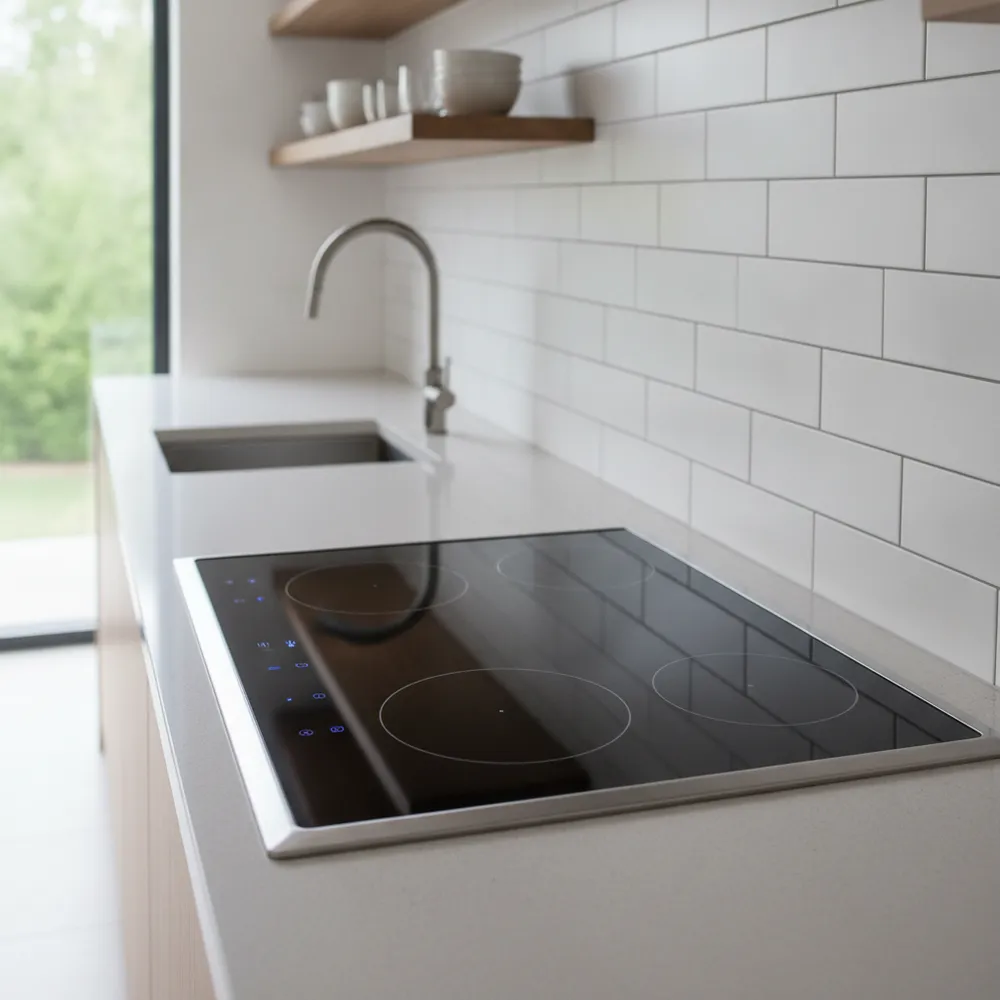
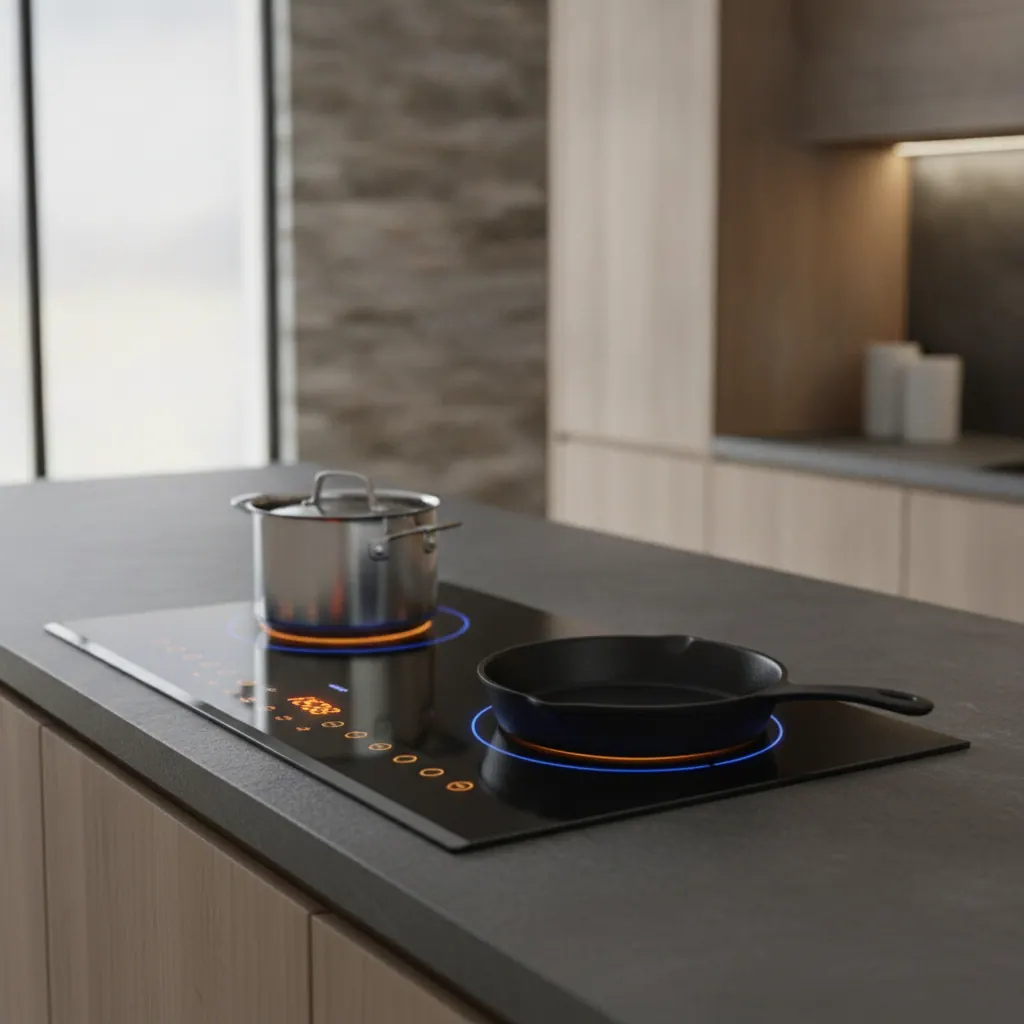
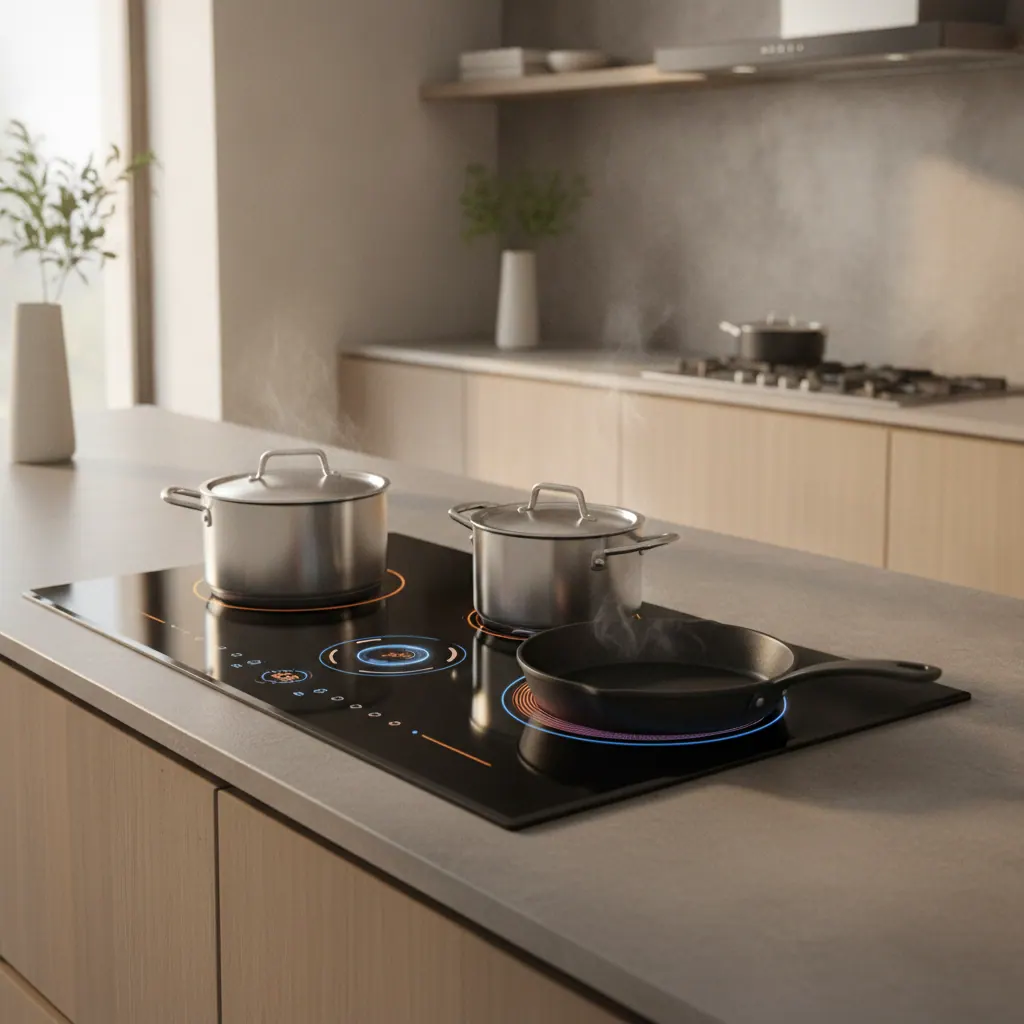
For cooks who want speed, precision and an easy-clean glass surface, Wolf’s induction line is compelling. Wolf offers induction cooktops in 15-, 30- and 36-inch widths, in framed transitional and unframed contemporary (flush-install) styles.
Per Wolf’s published specifications, the 36-inch transitional framed model (CI365TF) provides five cooking zones, 17 power settings and runs on a 50-amp, 240-volt circuit. The 30-inch model offers four zones on a 40-amp circuit. Because induction transfers energy directly into magnetic cookware, there is virtually zero wasted heat — the surface around the pan stays comparatively cool, and water boils noticeably faster than on radiant electric.
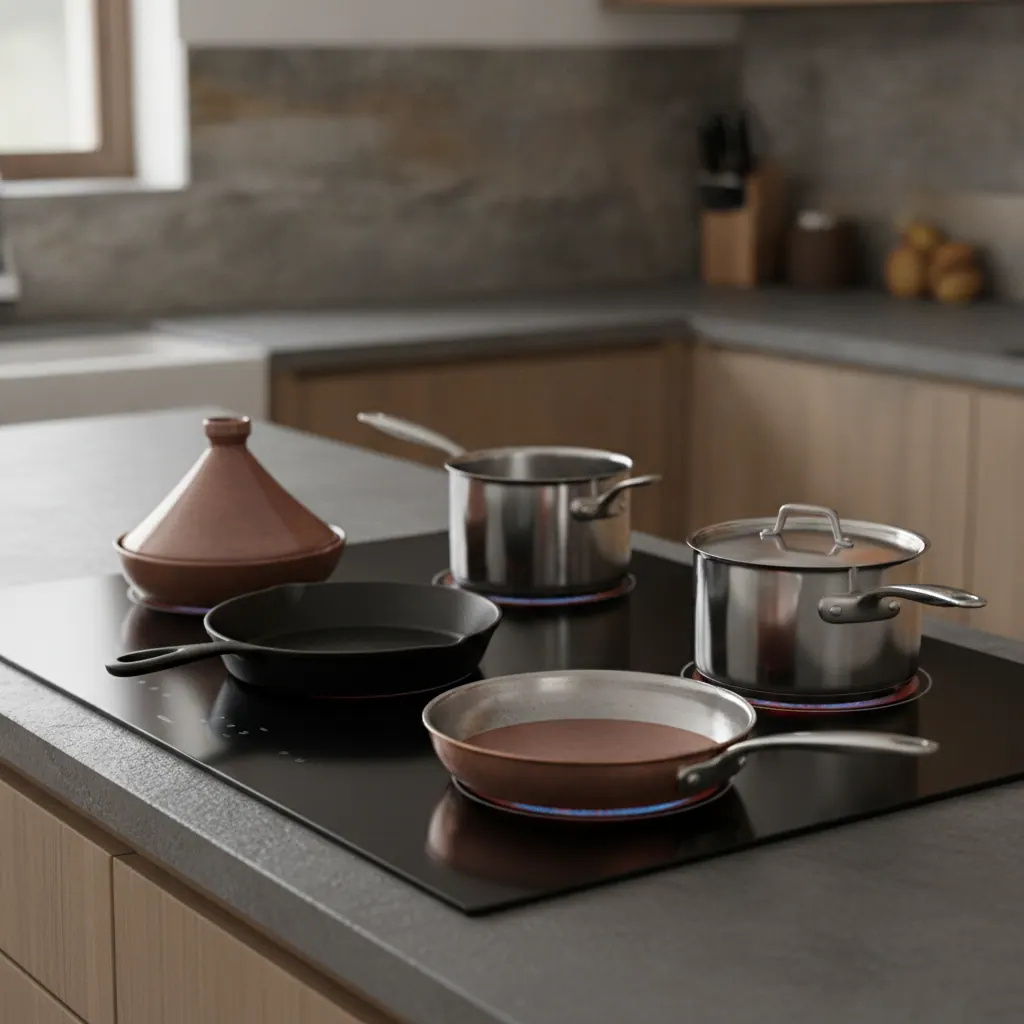
Wolf induction cooktops also include features such as bridge zones for griddles, melt and keep-warm settings, and touch controls with a control lock for safety. The trade-off is the usual one for induction: you need ferromagnetic (magnetic) cookware, and the best Wolf induction models cost as much as the gas versions. If you are weighing induction across brands, see our best induction cooktops 2026 comparison.
Wolf electric (radiant) cooktops
Wolf still sells traditional radiant electric cooktops — the framed CT-series (CT15E, CT30E and 36-inch) — for buyers who want a smooth glass-ceramic surface without the induction premium or the cookware restrictions. Wolf positions these as compatible replacements for its same-size induction models, so a CT electric can later be swapped for a CI induction unit in the same cutout. These radiant models are the most affordable entry into Wolf cooking, though they lack the speed and efficiency of induction.
Wolf cooktop lineup at a glance
| Wolf line | Fuel | Sizes | Standout feature | Approx. price |
|---|---|---|---|---|
| Transitional Gas (CG-T) | Natural gas / LP | 30”, 36” | Dual-stacked burners, up to 18,000 BTU upper tier | $3,000-$3,500 |
| Contemporary Gas (CG-C) | Natural gas / LP | 36” | Flush install, 20,000 BTU power burner | ~$3,375 (CG365C) |
| Compact Gas (CT15GS) | Natural gas / LP | 15” | Two dual-stacked burners for islands | ~$2,000-$2,500 |
| Induction (CI) | Electric induction | 15”, 30”, 36” | Up to 5 zones, 17 power settings, flush option | $2,000-$3,500+ |
| Radiant Electric (CT-E) | Electric | 15”, 30”, 36” | Smooth glass, induction-swap compatible | $1,500-$2,500 |
Prices are approximate U.S. MSRP ranges drawn from authorized dealer listings; Wolf restricts online price display, so confirm with a local dealer.
Build quality and warranty
Wolf’s reputation rests heavily on materials and feel: heavy continuous cast-iron grates, substantial knobs with a damped action, and thick stainless or glass surfaces. The warranty backs this up. Per Sub-Zero, Wolf cooking appliances carry a two-year full warranty on the complete product, plus a five-year full and twelve-year limited warranty on the sealed gas burner system. That long sealed-system coverage is a meaningful signal of expected longevity for a cooktop you intend to keep for a decade or more.
The iconic red knobs
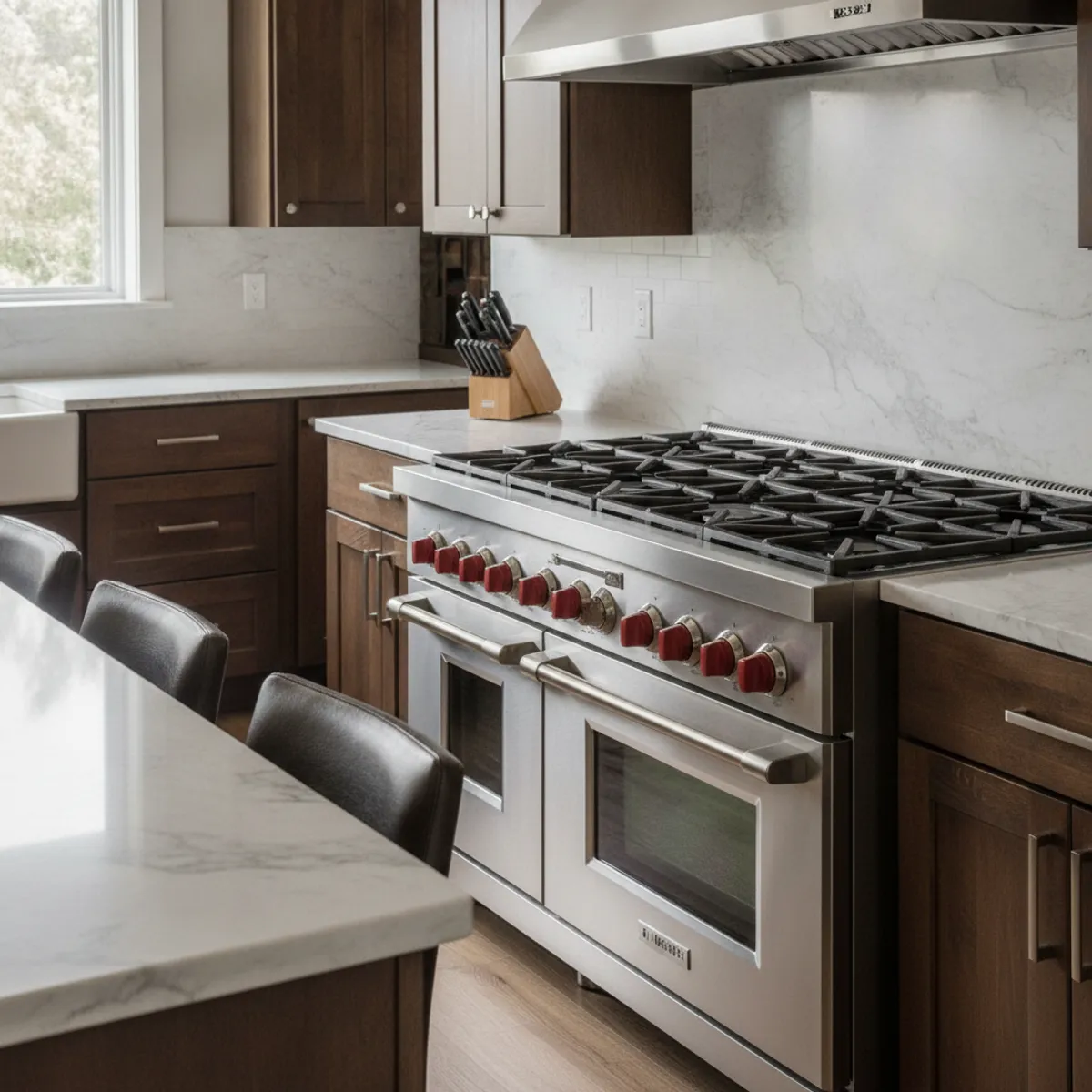
No discussion of wolf cooktops is complete without the red knobs. Originally a commercial-equipment cue, the bright red controls have become Wolf’s most recognizable design signature — a visual shorthand for “professional kitchen.” They are standard on many transitional models, but they are not mandatory: Wolf supplies stainless and black knob kits, and the contemporary line uses illuminated knobs that mount discreetly to the cabinetry. Owners can mix or swap finishes to suit a kitchen’s palette.
Wolf vs Thermador vs Viking
At this price level, the real decision is usually between three American luxury brands.
- Wolf leads on build feel, brand cachet and the versatile dual-stacked burner that delivers both high sear and genuine simmer from the same spot.
- Thermador counters with its patented Star burner and Pedestal Star, which spread flame more evenly and reach an extra-low simmer; Thermador also runs aggressive kitchen-package promotions.
- Viking offers comparable commercial styling and high-BTU open burners, often at a slightly lower entry price, though reviewers tend to rate Wolf’s fit-and-finish higher.
For a head-to-head on the most-searched matchup, read our detailed Wolf vs Thermador gas cooktop breakdown. If you are also cross-shopping other professional names, see our Viking cooktops and Miele cooktops guides.
Honest pros and cons
Pros
- Dual-stacked gas burners give an exceptionally wide heat range, from 20,000 BTU sears to true low simmer.
- Strong build quality and a 12-year limited sealed-system warranty.
- Wide lineup: gas, induction and radiant electric in 15-, 30- and 36-inch widths.
- American-made with genuine professional heritage and high resale cachet.
Cons
- Premium pricing — most models land between $2,000 and $3,500-plus.
- Dealer-restricted online pricing makes comparison shopping harder.
- Some rivals (notably Thermador) offer a lower simmer and stronger package deals.
- Induction models require magnetic cookware, and service may need a factory-certified technician.
Who Wolf cooktops are for
Wolf is the right call if you cook seriously and often, value the feel of professional-grade equipment, and plan to keep the appliance for many years. The brand rewards buyers who will actually use the heat range — searing steaks one minute and holding a delicate beurre blanc the next. If you cook lightly, prioritize the lowest price, or want the broadest feature set per dollar, a mid-tier brand will serve you better. For everyone else, wolf cooktops remain one of the most credible choices in the luxury cooking category in 2026.
Frequently Asked Questions
Are Wolf cooktops worth the money?
For serious home cooks who want professional-grade heat control, yes. Wolf’s dual-stacked gas burners and precise induction zones justify the premium, and the brand’s build quality and 12-year limited sealed-system warranty support a long service life. Budget cooks will find better value elsewhere.
Where are Wolf cooktops made?
Wolf is part of Sub-Zero Group, a privately owned American company headquartered in Madison, Wisconsin. Wolf cooking appliances are designed and manufactured in the United States, with production based in Wisconsin, which the brand markets heavily as a point of pride.
Wolf vs Thermador cooktops — which is better?
Neither is universally better. Wolf emphasizes dual-stacked burner versatility and iconic red knobs; Thermador’s Star burner and Pedestal Star give patented flame spread and very low simmer. Choose Wolf for build feel and brand cachet, Thermador for simmer flexibility and package deals.
Does Wolf make induction cooktops?
Yes. Wolf offers induction cooktops in 15-, 30- and 36-inch widths, in framed (transitional) and unframed flush (contemporary) styles. The 36-inch models provide five cooking zones and 17 power settings, delivering fast, efficient and precise heat with near-zero wasted energy.
What are the iconic Wolf red knobs about?
The bright red control knobs are Wolf’s signature visual cue, instantly identifying a kitchen as professional-grade. They are standard on many models but optional in look — Wolf also supplies stainless and black knob kits, so owners can swap the red for a more discreet finish.